


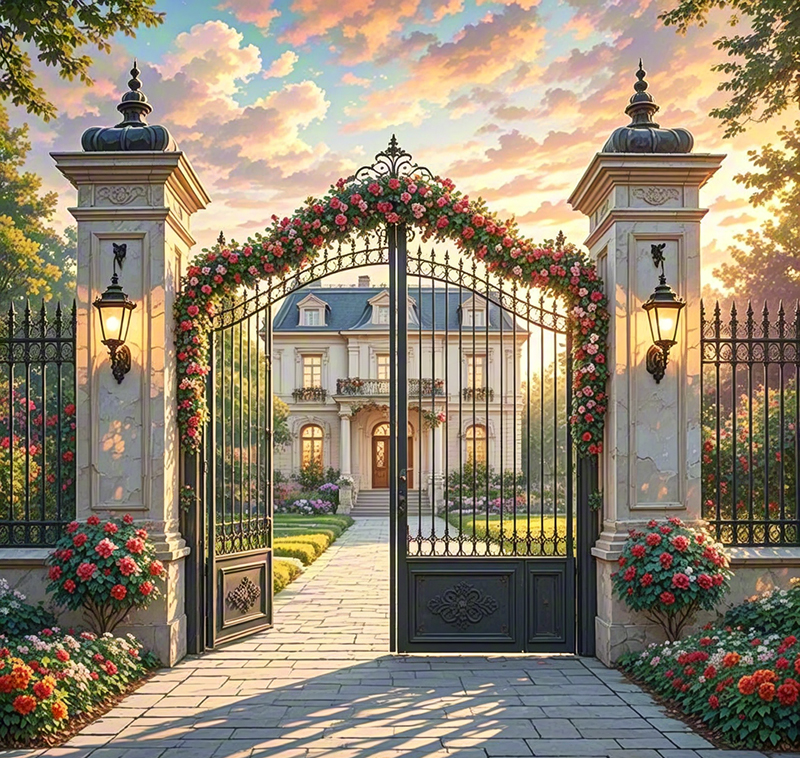
In Feng Shui, the main entrance door is regarded as the “Qi gateway” of a home, much like the mouth and nose of a person, serving as the primary channel through which the house absorbs external vitality, wealth, and energy. Its layout, orientation, and colour directly influence the overall energy field within the home, thereby affecting the occupants’ fortune, health, and interpersonal relationships. Therefore, selecting an appropriate colour for the entrance door is not merely an aesthetic consideration but a crucial Feng Shui practice that “brings the home to life.” Below, we systematically analyse the Feng Shui principles behind entrance door colours from three perspectives: the Five Elements theory, directional attributes, and practical taboos.
I. The Five Elements Theory: Resonance Between Colour and Energy
Feng Shui posits that colours are tangible expressions of the Five Elements’ energy. The colour of the entrance door should align with the Five Elements attributes of the occupants or the core members of the household to achieve a “harmonious energy flow.”
Metal Element Individuals: Suitable colours include white, gold, and silver tones. Metallic colours symbolise wealth accumulation and career stability, making them ideal for families engaged in finance or management.
Wood Element Individuals: Opt for green, teal, and blue tones. Wood-element colours represent vitality and growth, benefiting households in education or creative industries.
Water Element Individuals: Prefer black, blue, and grey tones. Water-element colours symbolise wisdom and fluidity, suitable for families involved in trade or logistics.
Fire Element Individuals: Choose red, purple, and orange tones. Fire-element colours represent passion and initiative, positively impacting households in sales or performing arts.
Earth Element Individuals: Favour yellow, brown, and beige tones. Earth-element colours symbolise stability and inclusiveness, ideal for families in real estate or agriculture.
Avoid “clashing elements” combinations, such as Metal-element individuals using red (Fire melts Metal) or Wood-element individuals using white (Metal chops Wood), as this may lead to energy conflicts and fluctuations in fortune.
II. Directional Attributes: Harmonising Space and Colour
The orientation of the entrance door determines its corresponding Five Elements attribute. The colour selection should coordinate with the directional energy to create a “harmony between heaven and human” arrangement.
East/Southeast (Wood Zone): Suitable colours include green, teal, and black tones. Pairing Wood-element directions with analogous colours enhances family health and academic luck.
South (Fire Zone): Opt for red, purple, and green tones. Fire-element directions paired with Wood colours (Wood fuels Fire) boost creativity and social luck.
Southwest/Northeast (Earth Zone): Prefer yellow, brown, and red tones. Earth-element directions paired with Fire colours (Fire generates Earth) strengthen wealth accumulation and stability.
West/Northwest (Metal Zone): Choose white, gold, and beige tones. Metal-element directions paired with analogous colours enhance career luck and authority.
North (Water Zone): Favour blue, black, and white tones. Water-element directions paired with Metal colours (Metal produces Water) promote wisdom and fluidity.
If the direction and colour clash, such as using red (Water clashes with Fire) in the North Water zone, it may lead to family tension or financial loss.
III. Practical Taboos: Avoiding Energy Imbalances
1.Avoid Excessively Dark or Bright Colours: Black doors may induce a sense of oppression, potentially leading to health issues over time; vivid red doors may cause irritability and increase family conflicts.
2.Avoid Damage: Gaps in the door symbolise “excessive Fire energy,” while holes in the door panel represent “wealth leakage.” Prompt repairs or replacements are necessary.
3.Avoid Dual Doors Without Hierarchy: Two equally sized entrance doors disrupt family order. If dual doors are necessary, adhere to the principle of “one large, one small, with clear hierarchy.”
4.Avoid Direct Alignment with Stairs/Internal Doors: An entrance door directly facing stairs creates “curtain water”煞气 (negative energy), while alignment with internal doors causes direct energy clashes. Use screens or door curtains to mitigate these effects.
5.Avoid Clutter: Keep the area around the entrance door tidy, as clutter obstructs energy flow and impacts family fortune.
IV. Modern Applications: Balancing Tradition and Functionality
In contemporary home design, selecting an entrance door colour requires balancing Feng Shui principles with practical needs. For instance, neutral colours (beige, grey) have become a safe choice for most households due to their versatility, while metallic shades (champagne gold, rose gold) meet Feng Shui requirements through material innovation and align with modern aesthetics. Additionally, soft furnishings like door mats or decorative art can supplement Five Elements energy.
In Feng Shui, selecting the colour of the entrance door is fundamentally about harmonising the spatial energy through colour to create a harmonious and stable living environment for the household. By understanding the logic of the Five Elements’ mutual generation and restraint, and combining directional attributes with practical taboos, one can achieve the Feng Shui goal of “accumulating auspicious energy,” making the entrance door a guardian of the family’s fortune.

Leave a Reply