


The kitchen serves as the energy hub of a home, with its feng shui layout directly influencing family health and financial prosperity. The design of windows above the kitchen sink must balance natural light, ventilation, and energy flow. Below is an analysis from three perspectives: orientation selection, taboo avoidance, and resolution methods.
I. Orientation Selection: Aligning with Five Elements to Attract Positive Energy
East & Southeast: Wood-Fire Harmony for Wealth
The east represents wood, while the southeast (Xun palace) governs wealth and interpersonal relationships. The water element of the sink forms a beneficial五行 (Five Elements) cycle when paired with fire (stove). A window facing east allows morning sunlight to purify the sink area, symbolizing “auspicious qi from the east.” For example, a Shanghai family reoriented their kitchen window eastward and added greenery, reporting improved career luck within six months.
South: Fire Zone Requires Caution
The south corresponds to fire. Combining a sink with a south-facing window creates water-fire conflict. If unavoidable, place yellow flowers (earth element to balance water-fire) on the windowsill or hang copper bells to dissipate negative energy. A Beijing case study showed reduced family conflicts after adjusting windowsill plant arrangements.
North: Water Zone Needs Yin-Yang Balance
The north represents water. Cold winter winds through north-facing windows can cause excessive dampness. Solutions include:
Installing double-glazed windows
Adding warm-toned lighting (e.g., 4000K LED) on the sill
Placing moisture-absorbing plants like Chinese yew
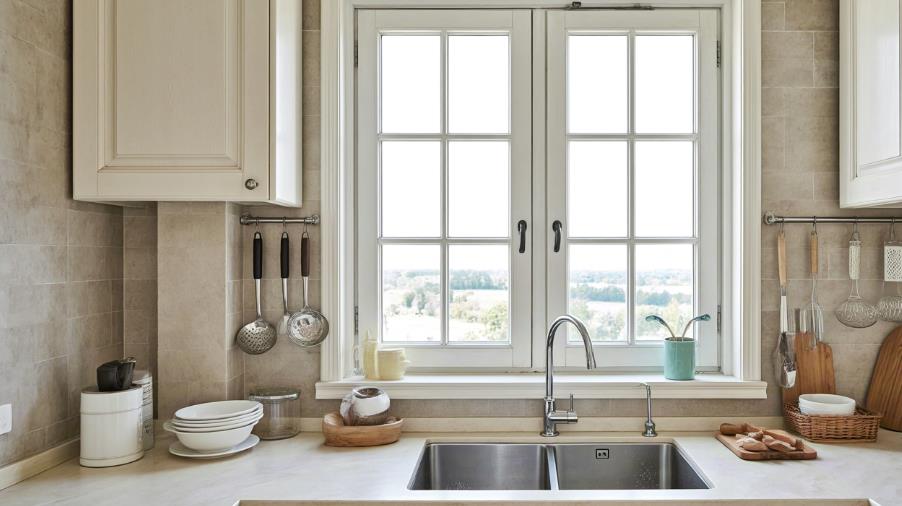
II. Taboo Avoidance: Neutralizing Negative Energy Patterns
Taboo 1: Windows Facing Sharp Objects
Sharp structures like building corners or power lines create “fire-shaped煞 (sha)” energy, risking accidental injuries. Countermeasures:
Hang a convex Bagua mirror to reflect negative energy
Place a泰山石敢当 (Tai Shan stone) on the sill (height exceeding sink)
Grow cacti (keep away from sink to prevent root rot)
Taboo 2: Direct Alignment Between Window and Stove
Maintain ≥60cm distance between sink and stove to form a “water-fire harmony” golden triangle. For small kitchens, use L-shaped cabinets or a chopping board as a divider. A Guangzhou 90㎡ apartment saved $170/year on gas after adopting a U-shaped kitchen layout that resolved water-fire conflict.
Taboo 3: Suspended Stove Below Window
Stoves require solid back walls symbolizing “financial support.” If unavoidable:
Ensure wall thickness ≥24cm behind stove
Keep sill height ≥30cm above stove surface
Use matte window frames (avoid reflective glare)
III. Resolution Methods: Detail Adjustments for Energy Transformation
Lighting Control: 300 Lux Standard
The sink area needs sufficient illumination to prevent yin energy accumulation. Recommendations:
Install waterproof LED strips under cabinets
Use adjustable spotlights for task lighting
Switch to warm light (≤3000K) on cloudy days
Airflow Optimization: Resolving Straight Path Sha
For windows aligned with the front door (creating straight airflow):
Place broad-leaf plants (e.g., Monstera, height exceeding sill)
Install a feng shui water wheel (water flows inward)
Hang six-empire coins (require blessing)
Color Scheme: Five Elements Balance
Sink cabinets: Beige (earth element neutralizes water)
Window frames: Avoid red (fire element exacerbates conflict)
Curtains: Light gray blackout curtains (metal element balances water-fire)
IV. Modern Science-Based Supplementary Advice
Splash Prevention: 15° Inclined Sill
Prevent water damage to window frames with quartz sills featuring drainage channels.
Child Safety: Window Limiters
Install window restrictors (opening ≤10cm) to prevent climbing accidents.
Noise Reduction: Double-Glazing
Use 6mm+12mm+6mm glass for kitchens near roads, reducing noise by 30 decibels.
The feng shui layout for windows above kitchen sinks combines environmental energy principles with ergonomic design. Through orientation selection, taboo avoidance, and detail optimization, homeowners can create functional modern kitchens while maintaining harmonious energy flow. We recommend using a compass for precise orientation before renovation and customizing solutions based on family members’ birth elements (e.g., “Yang Fire” individuals benefit from southwest-facing windows).




Leave a Reply