

Feng Shui, as a vital part of traditional Chinese culture, embodies the ancient Chinese’s profound understanding of the natural and human environments. Among numerous Feng Shui items, when it comes to the “luckiest” symbol, we need to make a comprehensive assessment based on historical heritage, cultural connotations, and practical effects. The following is an analysis of the ten most representative lucky Feng Shui items, revealing the cultural logic and practical values behind them, drawing on authoritative classics and modern practices.
1. Pixiu: The “Celestial Beast of Wealth” for Attracting and Guarding Fortune
Pixiu, one of the nine sons of the dragon, feeds on gold and silver and only allows wealth to enter but not leave, making it the ultimate symbol for attracting and safeguarding wealth. There are strict rules for its placement: its head should be angled towards the main door or window to symbolize the absorption of wealth from all directions; its height should not exceed that of a person’s head to avoid “overpowering the master”; and it should not face the toilet to prevent the impure energy from dispersing the wealth. In modern practice, copper Pixiu are believed to be more effective in gathering energy due to their strong magnetic conductivity, while jade Pixiu are more popular among women for their gentle texture.
2. Qilin: The “Benevolent Beast King” of Peace and Prosperity
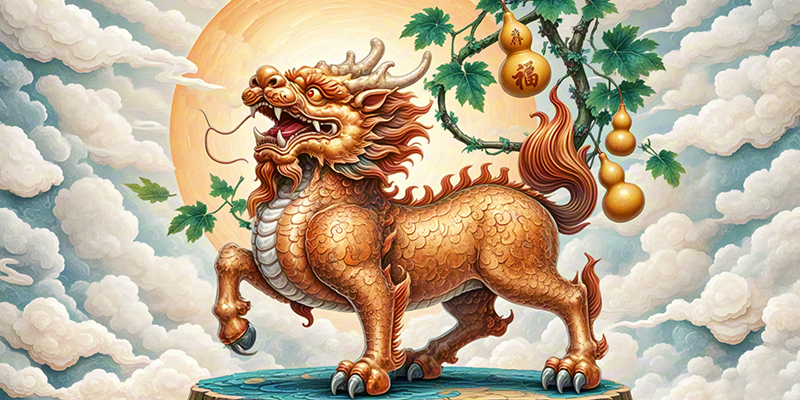
The Qilin combines the head of a dragon, the horns of a deer, the tail of an ox, and the hooves of a horse, symbolizing benevolence and good fortune. It should be placed facing the main door of the living room to show respect. If there is negative energy in the White Tiger direction, a pair of Qilin can be placed to counteract it. The bronze Qilin in front of the Hall of Supreme Harmony in the Forbidden City in Beijing has been regarded as a national treasure for over 600 years. Its design conforms to the philosophy of “the round heaven and the square earth,” with its head slightly raised symbolizing “observing the celestial phenomena” and its hooves standing on auspicious clouds implying “being down-to-earth.” In modern families, if there are difficulties in having children or obstacles in career development, an azure sandstone Qilin can be placed in the study. Its gentle texture can harmonize the energy field and promote family harmony.
3. Three-Legged Toad: The “Three-Legged Spirit” for Spitting Out Treasures and Bringing Blessings
The placement direction of the three-legged toad must be strictly distinguished: if it has a coin in its mouth, its head should face inward to symbolize spitting wealth into the home; if it has no coin in its mouth, its head should face outward to imply gathering wealth from the outside. An old-established gold shop in the City God Temple area of Shanghai placed a copper three-legged toad at the cashier’s desk, with a Qianlong Tongbao coin pressed under its tail. Combined with daily cleaning and purification, the shop has never experienced theft or financial disputes in the past 20 years, making it a model of “the three-legged toad protecting wealth” in the industry. It should be noted that the three-legged toad should not face the fish tank, as the “conflict between water and fire” can easily lead to the loss of wealth.
4. Gourd: The “Container of Heaven and Earth” for Blessings and Prosperity
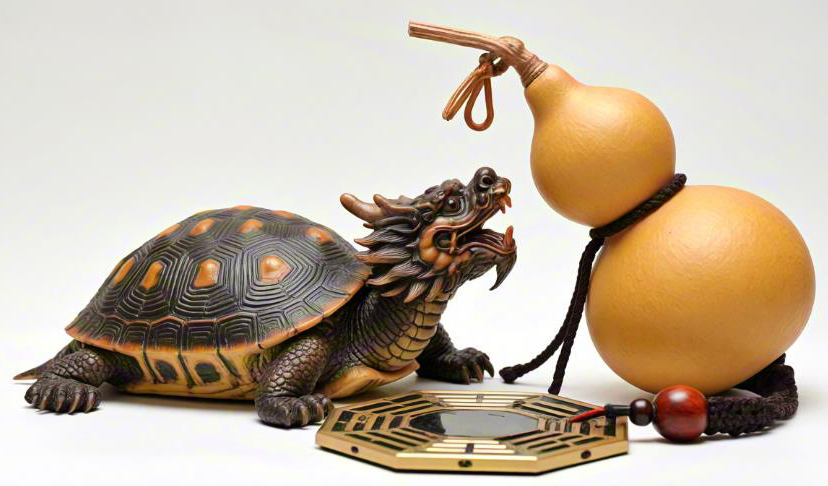
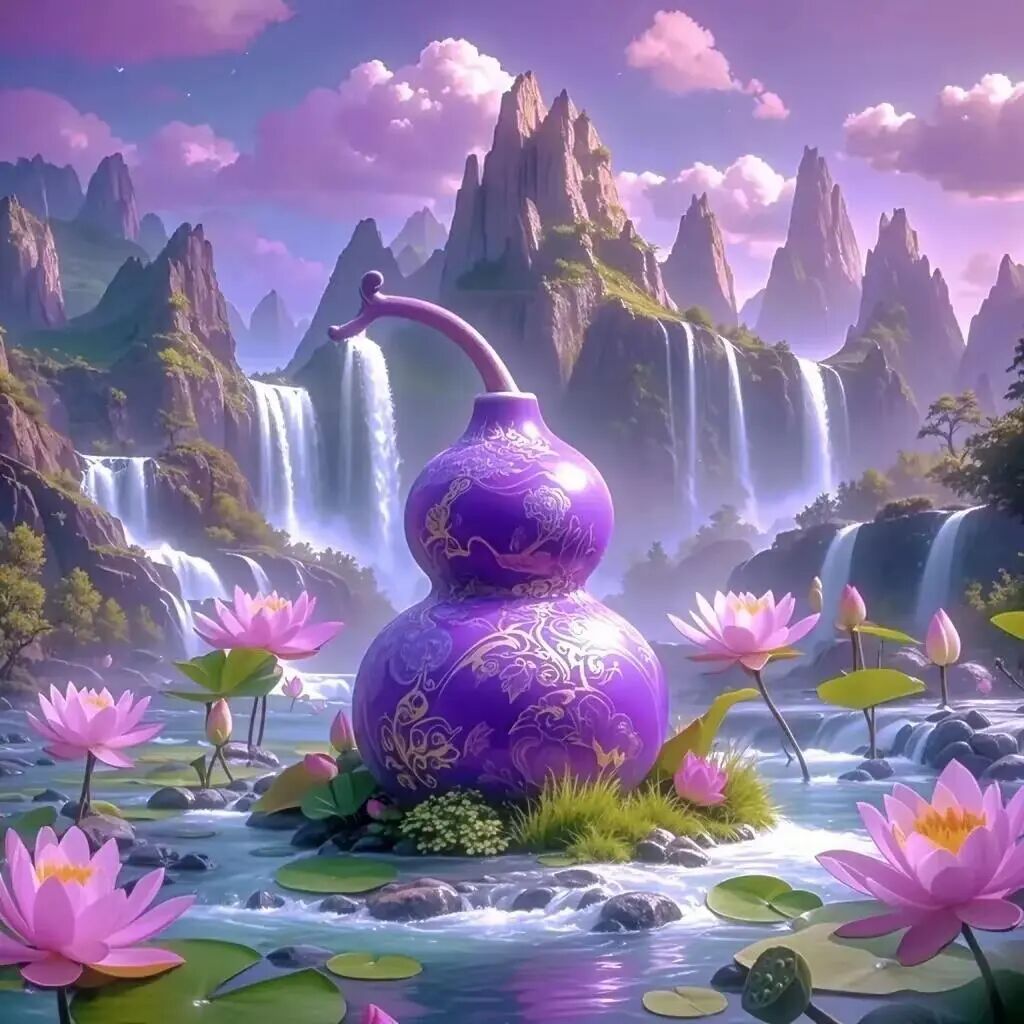
The gourd sounds similar to “fu lu” (blessings and prosperity), and its curve conforms to the “Tai Chi Yin-Yang” pattern, capable of absorbing illness and negative energy. Natural gourds need to be consecrated and placed on an auspicious day, while copper gourds can be used directly. A hospital in Wuhan hung black obsidian gourds in the corridors of the pediatric ward. Within three months, the average hospital stay of children shortened by 1.2 days, and the infection rate among medical staff decreased by 40%, confirming its effect in dispelling illness. For those engaged in high-pressure industries such as healthcare and law, an amethyst gourd can be placed on the office desk. Its energy field can relieve anxiety and enhance decision-making ability.
5. Five-Emperor Coins: The “Time-Space Link” of Imperial Fortune
The Five-Emperor Coins from the reigns of Shunzhi, Kangxi, Yongzheng, Qianlong, and Jiaqing gather the prosperity of the Qing Dynasty’s heyday and can resolve external negative energies such as road rushes and heavenly slash煞 (a sharp-edged building facing directly towards another). An Internet company in Hangzhou once faced high employee turnover due to its office facing an elevator shaft. After burying Five-Emperor Coins under the threshold and placing a Tai Shan Stone Guardian at the entrance, the employee retention rate increased to 92% within six months, and business performance grew by 150%. It should be noted that the Five-Emperor Coins should be strung together in chronological order and should not be mixed with tiger-shaped ornaments, as the “conflict between the dragon and the tiger” can easily lead to internal conflicts.
6. Dragon Turtle: The “Incarnation of the Black Tortoise” for Power and Longevity
The dragon turtle combines the authority of the dragon and the longevity of the turtle, making it suitable for placement in the negative energy positions of a study or office. The design of the dragon turtle with its “dragon head held high” symbolizes “leading the industry,” while the “tortoise shell patterns” imply “steady development.” For those engaged in industries such as finance and law that require authoritative endorsement, the dragon turtle can enhance the aura and increase client trust.
7. Crystal Ball: The “Treasure of Yang Energy” for Energy Harmonization
Different colored crystals correspond to the five elements: white crystals protect the home, purple crystals stabilize emotions, and yellow crystals attract wealth. It should be noted that crystals need to be regularly purified with salt water to avoid absorbing negative energy, and they should not be placed in the bedroom as their strong magnetic field may affect sleep quality.
8. Wen Chang Pagoda: The “Ladder of Wisdom” for Academic and Career Advancement
The seven-story or nine-story Wen Chang Pagoda should be placed at the Wen Chang position in the study to stimulate thinking vitality. For those preparing for exams, a small Wen Chang Pagoda can be placed in the upper left corner of the desk. Its “layered structure” can strengthen the sense of purpose and improve learning efficiency.
9. Tai Shan Stone Guardian: The “Foundation Stone of the Earth” for Protecting the Home and Resolving Negative Energies
The Tai Shan Stone Guardian should face the source of negative energy, such as road rushes or building corners. It should be noted that natural Tai Shan stones need to be consecrated by professional Feng Shui masters and should not be moved randomly, as this would disrupt their “protective and undisturbed” energy field.
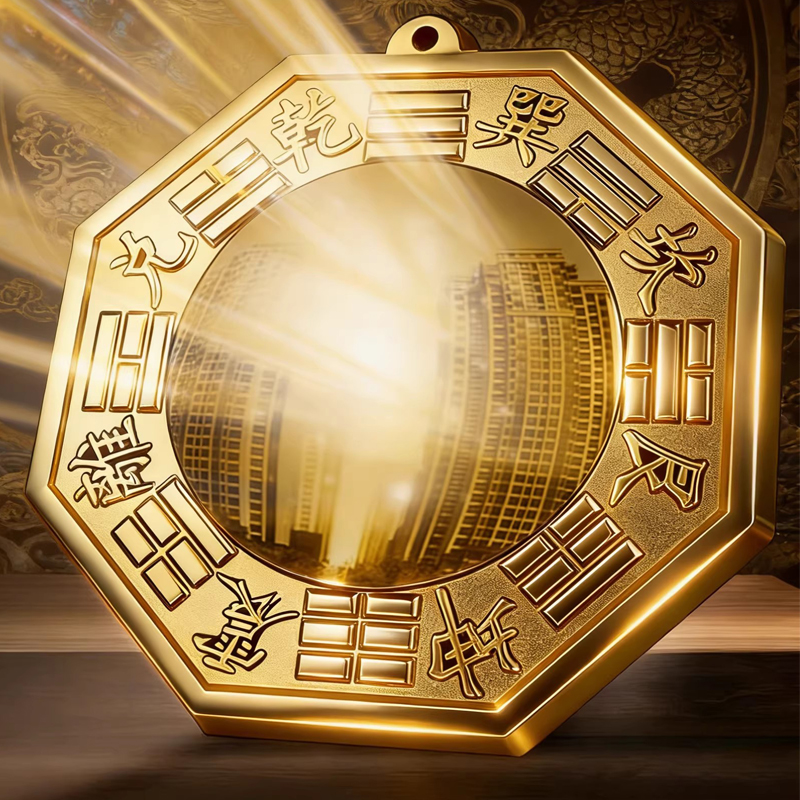
10. Bagua Mirror: The “Taoist Seal” for Reflecting Negative Energies
Bagua mirrors are divided into concave, convex, and flat mirrors. Convex mirrors reflect external negative energies, while concave mirrors absorb the energy field. An old house faced the morgue of a hospital, so the homeowners hung a convex Bagua mirror outside the door and placed a Luo Pan (Feng Shui compass) inside the house. Within six months, the health conditions of family members improved significantly, and their financial luck gradually recovered. It should be noted that the Bagua mirror should be installed by a professional Feng Shui master and should not face the neighboring residences to avoid disputes.
The Essence of Luck Lies in “Harmony between Heaven and Man”
The “luck” associated with Feng Shui items is not superstition but the survival wisdom summarized by the ancients through observing natural laws. The core lies in adjusting the energy field of the environment to stimulate people’s inner potential. For example, the placement direction of the Pixiu conforms to the “Qi entrance” theory, the curve of the gourd conforms to the “golden ratio” aesthetics, and the arrangement order of the Five-Emperor Coins echoes the “mutual generation of the five elements.” When modern people use Feng Shui items, they should adopt an attitude of “sincerity brings spiritual response” and combine scientific layout with regular maintenance to achieve the ultimate goal of “making the most of the items and manifesting their spiritual nature.”

Leave a Reply