


The Art of Sleeping: The Feng Shui Principles of Stability, Gathering, Protection, and Quietude
We spend one-third of our lives in bed. In Feng Shui, the placement of your bed isn’t just about furniture arrangement; it is a precise dispatch of “Qi” (energy). A misplaced bed can lead to nightmares and lethargy, while a correctly placed one can boost your fortune and health. To sleep better and improve your luck, you must master the four core principles: Stability, Gathering, Protection, and Quietude.
1. Stability: The Backing Mountain
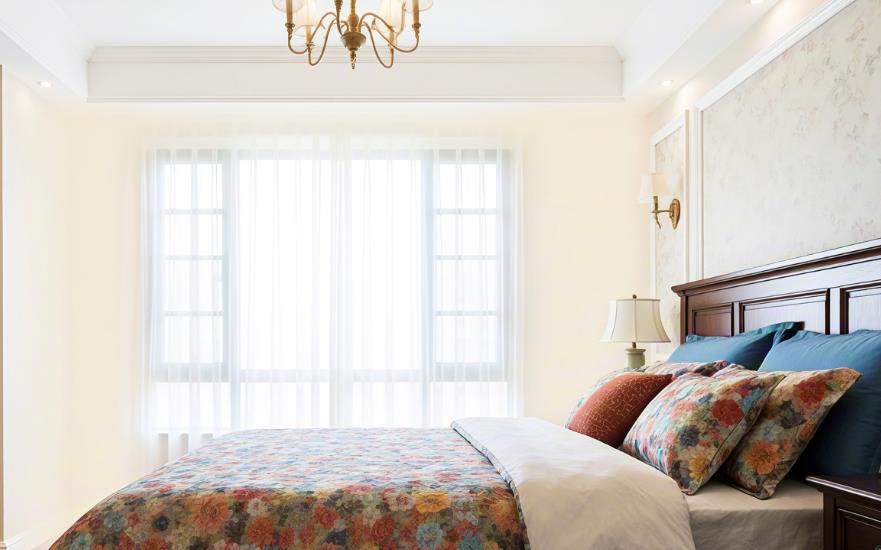
The essence of the bed is “stability.” Feng Shui dictates that the headboard must be against a solid wall. This creates a “backing mountain.” If your headboard faces a window, a door, or an empty cabinet, you lack support. This subconscious insecurity causes restlessness and career instability.
Furthermore, never place a bed under an exposed beam. A “beam pressing down” creates physical and psychological oppression, potentially leading to headaches or bad luck. If structural limits make this unavoidable, hide the beam with a false ceiling or hang a gourd (a traditional cure) beneath it. Don’t take chances.
2. Gathering: Trapping the Qi
“Gathering” is crucial for the bedroom. The bedroom is a private sanctuary for Qi. If the foot of the bed faces the door directly, it creates a “door rush.” The Qi rushes in and hits your feet, causing energy to leak out. This leads to financial loss and petty annoyances. Fix this with a screen, a low cabinet, or by angling the bed to slow the flow of air.
Also, avoid placing the foot of the bed directly opposite a window. Windows are where light and air enter and exit; facing them scatters your energy. If you can’t move the bed, heavy blackout curtains are your last line of defense. Additionally, the “wealth corner” (usually the diagonal opposite the door) should not be an open window, or money will slip through your fingers.
3. Protection: The Dragon and the Tiger
“Protection” refers to balance on both sides. Ideally, there should be equal space on the left and right sides of the bed. In Feng Shui, we say “Left Green Dragon, Right White Tiger.” If one side is blocked by a wall or a massive wardrobe, energy flow is stifled, leading to marital arguments or career bottlenecks. Use matching nightstands on both sides to symbolize harmony and attract helpful people (benefactors).
However, keep the sides clear of clutter. Crucially, the space under the bed must be clean. Clutter under the bed blocks the rising earth Qi, leading to mental fog and stagnant luck. Keep the under-bed space open for smooth energy circulation.
4. Quietude: Eliminating Sha Qi
“Quietude” is the nature of sleep. You must eliminate all “Sha Qi” (killing energy).
First, no mirrors facing the bed. Mirrors are “light Sha.” Their reflection at night causes fright and reflects your energy away, leading to insomnia or bad relationships (peach blossom trouble). Hide mirrors inside closet doors.
Second, avoid Water-Fire conflict. Don’t place the headboard against the bathroom wall (dampness and bad energy) or the kitchen stove (fire energy causes anger).
Third, limit electronics. TVs, computers, and large speakers are “invisible killers” of sleep quality due to radiation and electromagnetic waves. Keep the tech out of the bedroom.
5. Direction: Aligning with Destiny
Once the basics are set, align the bed with your personal Kua number. Generally, sleeping with your head North or South aligns with the Earth’s magnetic field, aiding blood circulation. Avoid sleeping with your head facing West, as it is culturally associated with “passing away” and is generally bad for health and vitality.
Feng Shui isn’t superstition; it is ancient wisdom regarding environmental psychology and magnetic fields. A correctly placed bed is your ultimate charger. When your bedroom is stable, gathers Qi, offers protection, and remains quiet, you will find that good luck often arrives with the first ray of morning sun. Adjust your bed tonight, and let every night’s sleep recharge your destiny.





Leave a Reply