


The main entrance holds a supreme position in Feng Shui, revered as the ‘mouth of qi’ and the ‘face’ of a dwelling. It is not only the primary passage for family and guests but also the main channel through which the home absorbs external energy (both auspicious and negative qi ). Its importance can be summarised into three core aspects:
I. The Main Entrance is the ‘Mouth of Qi’ – The Throat Determining Overall Fortune
In Feng Shui, ‘qi’ is the fundamental life force of all things and the carrier of wealth and health. A house, much like a human body, needs to breathe.
Drawing in auspicious *qi* brings prosperity: If the main entrance is located in an auspicious position and can draw in vibrant, thriving *qi*, then the entire home will be filled with positive energy. This provides a solid foundation for the occupants’ career success, financial prosperity, good health, and family harmony.
Drawing in negative *qi* leads to decline: If the main entrance faces an inauspicious direction or is directly aligned with negative features (such as lifts, staircases, straight roads, etc.), it will draw decaying and malignant *qi* into the interior. This can result in misfortunes for the family, financial loss, health issues, and constant disputes.
Conclusion: The direction and position of the main entrance directly determine whether the home absorbs ‘nourishment’ or ‘toxins’.
II. The Main Entrance is the ‘Face’ of the Home – The Gateway to Relationships and Wealth
The main entrance forms the first impression of the home, both internally and externally, directly influencing the occupants’ social relationships and wealth accumulation.
Impact on interpersonal relationships: A tidy, proper, and dignified entrance symbolises the owner’s generous and upright character, making it easier to attract supportive individuals and good friends, and leading to a wide social circle. Conversely, a poorly maintained entrance can lead to strained relationships and susceptibility to detractors.
Impact on wealth: In Feng Shui, the main entrance is also regarded as the ‘wealth door’. Qi enters through the door, circulates within the interior, and forms an energy-gathering pattern, which allows wealth to accumulate. If the door is damaged, too small, or poorly configured, it is like a leaky purse, making it difficult to amass wealth.
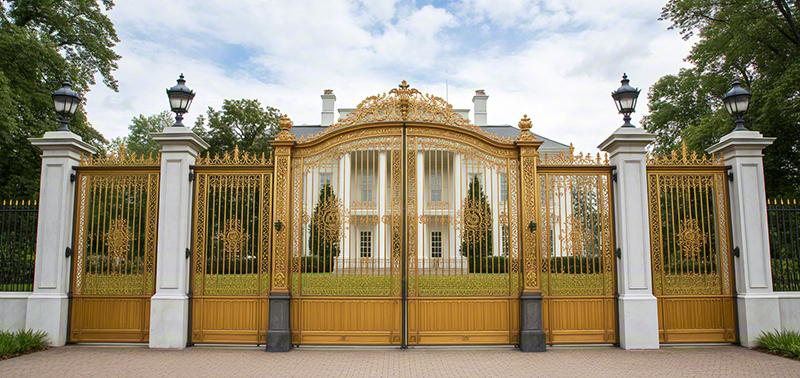
III. The Main Entrance is the ‘Barrier’ of the Home – The Fortress Guarding the Dwelling
The main entrance is the critical barrier separating the internal private space from the external public space, bearing the important responsibilities of deflecting negative energy, warding off malevolent influences, and safeguarding the home’s peace.
Deflecting external negative influences: A well-positioned and configured main entrance can effectively neutralise various external ‘Sha’ or negative forms, such as ‘Lu Chong’ (T-junction alignment), ‘Jian Jiao Sha’ (pointed corner alignment), or ‘Fan Gong Sha’ (reverse bow alignment), protecting the occupants from their adverse effects.
Stabilising the ‘qi’ field: The main entrance prevents the peaceful ‘qi’ inside from leaking out too quickly, allowing energy to circulate fully within the house and nourish the occupants, thereby achieving the highest Feng Shui ideal of ‘containing qi and accumulating wealth’.
Based on the above importance, a well-feng-shuied main entrance typically adheres to the following principles:
1. Faces an Auspicious Direction: The main entrance should ideally open towards one of the auspicious positions for the house, such as ‘Sheng Qi’ (Generating ‘Qi’), ‘Yan Nian’ (Longevity), or ‘Tian Yi’ (Heavenly Doctor), while avoiding the inauspicious positions like *Jue Ming* (Total Loss), *Wu Gui* (Five Ghosts), *Liu Sha* (Six Harms), or *Huo Hai* (Mishap).
2. Clean and Bright Exterior: The main door should be kept clean and in good repair. The area in front of the door should be open, bright, and free of clutter, symbolising a bright future and smooth ‘qi’ intake.
3. Appropriate Size and Proportion: The size of the main door should be proportionate to the overall scale of the dwelling. A door that is too large scatters *qi*, while one that is too small restricts *qi* intake and can lead to a narrow-minded outlook for the occupants.
4. Avoid Internal and External Confrontations with Negative ‘Qi’:
* Externally: It should not directly face a lift, staircase, straight road, large tree, lamp post, the corner of another building, a toilet, etc.
* Internally: It should not be directly aligned with windows, the back door, or a balcony, as this creates ‘Chuan Tang Sha’ (rushing-through qi), causing wealth to come and go without accumulating.
In summary, the main entrance is the ‘master switch’ and ‘first line of defence’ in home Feng Shui.
Whether building, buying, or renovating a property, the position, direction, colour, and configuration of the main entrance should be primary considerations.
Rectifying the Feng Shui of the main entrance lays the most crucial foundation for the entire home’s prosperity and harmony.
Each house contains a universe; directions vary, layouts differ, and the occupants’ energies are unique – thus, the Feng Shui and energy fields are also vastly different.



Leave a Reply